brainfAdmin

Contra-indications to Massaging Your Horse

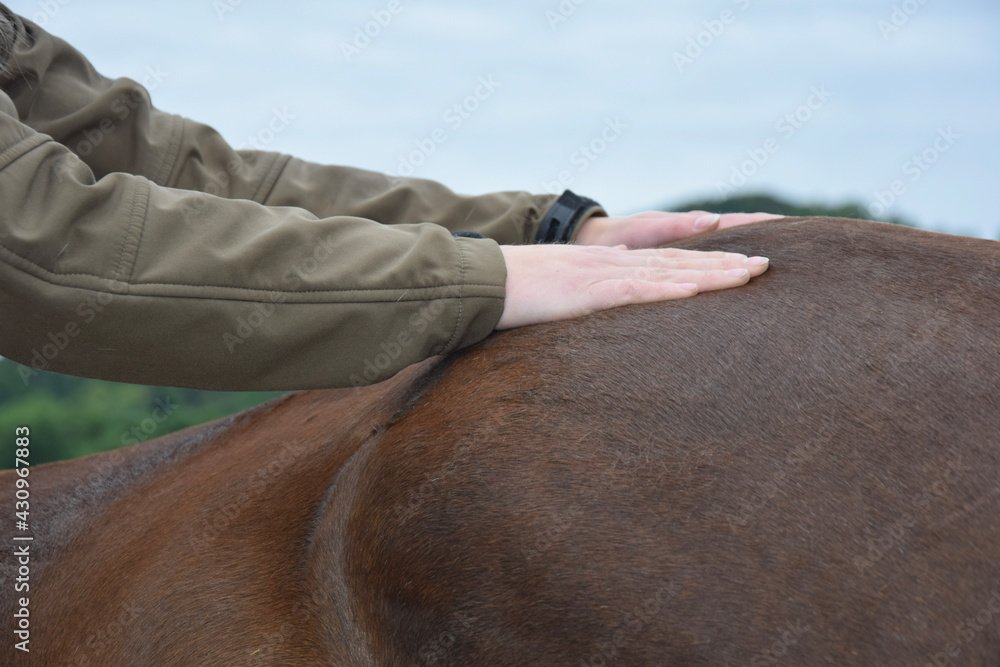
The term contra-indication is used to describe specific situations in which you should not massage a horse and in which you should seek the advice of your veterinarian. General Contra-Indications Do not massage when the horse’s temperature is over 102° Fahrenheit (F) or 39° Celsius (C). A horse’s normal temperature is 100°F, 38°C. A mild fever is present at

Contra-indications to Massaging Your Horse Read More »

Cold-Back

The term Cold-Back refers to an inflammatory condition of the muscles of the back. Most of us have seen horses with cold backs ranging from mild to severely tender, with the horse flitching down as soon as you touch his back. The main muscles affected in this condition are the longissimus dorsi, the iliocostalis and

Cold-Back Read More »

Stretching Your Dog

The therapeutic benefits of stretching are well known to all people, either to simply improve flexibility or just for relaxation. Today, stretching exercises are part of any training or fitness exercise program, as well as part of physiotherapy or massage therapy programs.  Because the physiological benefits of stretching upon the body are immediate, more and

Stretching Your Dog Read More »

Lyme Disease in Dogs

Lyme disease is one of the most common tick-transmitted diseases in the world. Lyme disease affects humans, horse and dogs, but is rarely seen in cats. Opinions vary regarding symptoms, diagnosis, vaccination controversies and treatment options. Lyme disease is caused by an organism known as a spirochaete and named Borrelia burgdorferi. It is transmitted by

Lyme Disease in Dogs Read More »

Shopping Cart
Scroll to Top